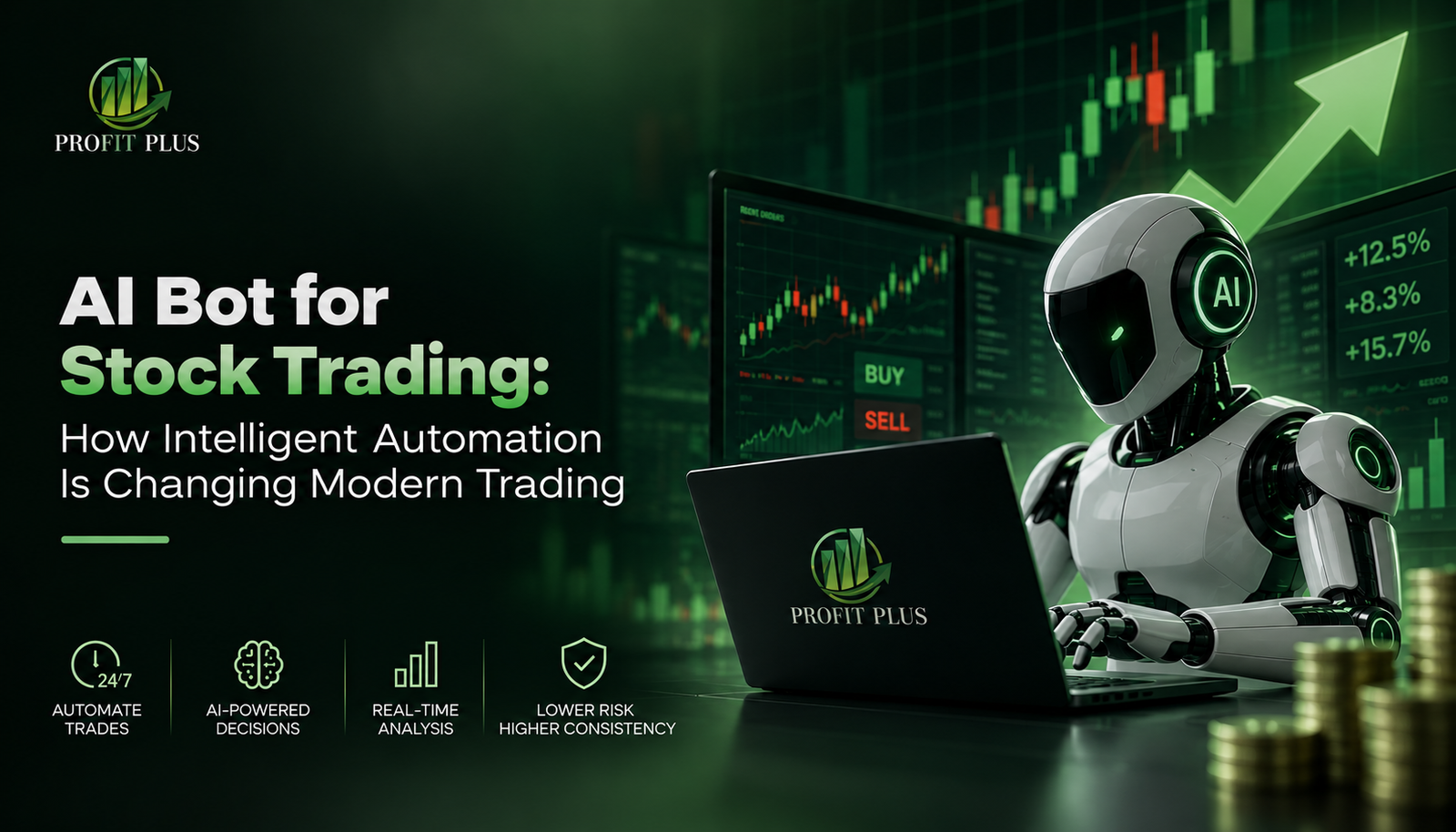
Stock trading has changed significantly with the growth of automation and artificial intelligence. Traders no longer have to depend entirely on manually watching charts, tracking price movements, and entering every order themselves.
An ai bot for stock trading can help automate parts of this process. Depending on the technology, an AI-powered system may analyze market information, identify predefined conditions, monitor trading activity, or help execute orders according to a strategy. However, there is an important distinction between automation and guaranteed performance.
AI can process information quickly and help reduce repetitive work, but it cannot eliminate market risk. Stock prices can move unexpectedly because of economic data, company announcements, geopolitical events, market sentiment, or other factors.
Financial regulators have also warned investors to be cautious about services that make unrealistic claims about AI-powered trading. FINRA specifically recommends researching automated trading providers and being skeptical of claims that AI can guarantee extraordinary returns.
The goal of intelligent automation should therefore be to make a trading process more structured and efficient—not to promise perfect trades.
Key Takeaways
- An AI trading bot uses software and data to automate selected trading tasks.
- Automation can reduce repetitive manual work and improve execution speed.
- AI does not guarantee profitable trades.
- A reliable system should have clear rules, controls, monitoring, and risk-management features.
- Traders should understand how a bot works before allowing it to execute trades.
- Backtesting and careful evaluation are important before relying on any automated strategy.
- Human oversight remains valuable, especially during unusual market conditions.
What Is an AI Bot for Stock Trading?
An ai bot for stock trading is software designed to use algorithms, data, and sometimes machine-learning techniques to assist with trading-related activities. Traditional trading often requires a trader to:
- Monitor the market.
- Identify a potential setup.
- Check predefined conditions.
- Decide whether to enter a trade.
- Place an order.
- Monitor the position.
- Exit according to the strategy.
Automation can handle some of these repetitive steps according to rules programmed into the system. More advanced systems may process large amounts of market data and use models to identify patterns or generate signals.
The exact capabilities vary widely. Some bots are simple rule-based systems, while others use sophisticated machine-learning models.
This is why traders should not judge a platform simply because it uses the word “AI.” The important question is:
What does the technology actually do?
FINRA notes that AI is already being explored in securities trading for areas such as smart order routing, price optimization, best execution, and allocation. At the same time, autonomous systems can create additional risks when market conditions change beyond what the model has experienced.
How Does an AI Trading Bot Work?
While systems differ, most automated trading solutions follow a basic process.
1. Collecting Market Data
The system receives information that may include:
- Price movements
- Trading volume
- Market indicators
- Historical data
- News or other information, depending on the system
- Account and position information
The quality of the data matters. Poor or incomplete information can produce poor results.
2. Analyzing Conditions
The software evaluates the available information against its programmed rules or models. For example, a strategy could look for a particular combination of price movement, volume, and technical indicators.
3. Generating a Signal
If the required conditions are met, the system can generate a trading signal. A signal might indicate that a particular setup deserves further attention or that a predefined trading condition has been satisfied.
4. Executing the Trade
If the system is configured for automatic execution, it may send the appropriate order through its connected trading infrastructure.This is one of the major advantages of automation: the system does not need to wait for someone to manually type an order.
5. Monitoring the Position
After execution, automated software can continue monitoring the trade according to the strategy’s rules. This can include tracking entry and exit conditions, position status, and other predefined parameters.
6. Reviewing Performance
The final step is often overlooked. Traders should review:
- Winning and losing trades
- Execution quality
- Drawdowns
- Strategy performance
- Trading frequency
- Errors or unexpected behavior
Performance analysis helps traders understand whether the system is actually supporting their strategy.
Step-by-Step: How AI Automation Supports Trading
Imagine a trader has a strategy based on specific market conditions. Without automation, the trader may spend hours watching charts. With an automated system, the workflow could look like this:
Step 1: The trader defines the strategy.
Step 2: The system monitors relevant market activity.
Step 3: The software checks whether predefined conditions are met.
Step 4: A signal is generated when those conditions occur.
Step 5: If automatic execution is enabled, the order is sent according to the configured rules.
Step 6: The system monitors the position.
Step 7: The trader reviews the results and adjusts the strategy when necessary.
This does not mean the bot “knows” what the market will do. It means the software can consistently follow a defined process without requiring the trader to perform every repetitive action manually.
Benefits of Using AI in Trading
Faster Execution
Markets can move quickly. Automation can help reduce delays between identifying a predefined setup and executing an order.
Less Repetitive Work
Constantly monitoring charts can become exhausting. Automation can handle repetitive tasks while allowing traders to spend more time on strategy development and analysis.
More Consistent Execution
Human traders can hesitate, enter trades late, or forget parts of their strategy. A properly configured automated system can follow the same rules repeatedly.
Real-Time Monitoring
Automation can monitor market activity continuously during the periods it is configured to operate. This can be particularly useful for traders who manage multiple instruments or accounts.
Multi-Account Management
Some trading automation platforms also allow trades to be copied across connected accounts. ProfitPlus, for example, focuses on futures trading automation and supports trade copying across multiple accounts, alongside real-time monitoring and automated execution.
Better Workflow
The biggest benefit may not be “more trades.” It can simply be a cleaner trading workflow. Instead of repeatedly performing mechanical tasks, traders can focus on:
- Strategy development
- Risk management
- Performance analysis
- Market research
- Improving their trading process
What Makes a Good Stock Market AI Bot?
Not every stock market ai bot is built the same way. Before using an automated system, look beyond marketing claims.
Clear Strategy
You should understand what the system is designed to do. A platform that simply says “AI-powered” without explaining its functionality deserves additional scrutiny.
Transparent Controls
Look for tools that let you understand and control important settings. Depending on the platform, these may include:
- Entry conditions
- Exit conditions
- Position size
- Trading hours
- Account connections
- Execution settings
- Risk controls
Monitoring and Reporting
A good system should make it possible to review what happened. Trade history, execution information, and performance reporting can help users evaluate their process.
Reliable Infrastructure
Technology failures can create problems in automated trading. Connection issues, software errors, delayed data, and execution problems are all important considerations.
Human Oversight
Automation should not mean ignoring your account. FINRA recommends that investors continue monitoring automated trading activity and make sure it remains consistent with their objectives and risk tolerance.
Practical Example of AI-Assisted Trading
Consider a hypothetical trader who uses a strategy based on several technical conditions. The trader’s manual process might look like this:
Watch charts → identify setup → confirm conditions → place order → monitor position → exit.
Now imagine some of those steps are automated.
The software monitors the market and checks for the predefined conditions. When the setup appears, the system can generate or execute the appropriate action based on its configuration.
The trader can then review the trade and evaluate whether the strategy performed as expected. The important point is that automation does not magically transform a weak strategy into a strong one. If the underlying strategy is poorly designed, automation may simply execute poor decisions faster.
Automation improves a process. It does not automatically improve the logic behind that process.
Common Mistakes Traders Should Avoid
1. Believing AI Guarantees Profits
This is perhaps the biggest mistake. No legitimate technology can remove all market risk. Be particularly cautious about claims involving guaranteed returns or systems that supposedly “never lose.” FINRA has specifically warned investors about exaggerated claims surrounding AI-powered auto-trading services.
2. Choosing a Bot Only Because It Uses AI
“AI” is not a quality guarantee.
Ask:
- What data does it use?
- What does the model actually do?
- How are trades generated?
- Can the strategy be tested?
- What controls are available?
3. Ignoring Risk Management
A sophisticated bot still needs sensible risk parameters.
Consider factors such as:
- Position size
- Maximum acceptable loss
- Trading frequency
- Exposure
- Account allocation
- Stop conditions
4. Skipping Testing
Do not immediately trust a strategy with significant capital.
Where appropriate, traders can evaluate strategies using historical data, simulations, paper trading, or smaller-scale deployment before increasing exposure.
5. Forgetting About Changing Markets
A strategy that worked under one market environment may behave differently under another. Unusual volatility, major economic events, geopolitical developments, and other unexpected conditions can challenge automated models. FINRA has highlighted this as an important risk for autonomous AI trading systems.
6. Giving Away Sensitive Account Information
Security should always be taken seriously. FINRA advises investors to be particularly careful when an auto-trading service requests brokerage credentials or other sensitive information.
Is AI Trading Completely Automatic?
Not necessarily. The word “automation” can describe many different levels of technology. A system may simply provide signals. Another may automate order execution. A more advanced platform may monitor positions and execute multiple predefined actions automatically. This distinction matters.
Before using an ai bot for stock trading, determine exactly which activities are automated and which remain under your control.
How to Choose the Right AI Trading Tool
Use this checklist before committing to an automated trading platform:
- Understand the product. Know what it actually automates.
- Research the provider. Check its reputation and available information.
- Review costs. Understand subscription, transaction, and other applicable fees.
- Look for transparency. Avoid vague technology claims.
- Understand security. Know how account information and credentials are handled.
- Test the strategy. Use appropriate testing methods before taking significant risk.
- Check risk controls. Make sure the system fits your trading approach.
- Monitor performance. Automation does not remove the need for oversight.
- Avoid unrealistic promises. Guaranteed returns are a major warning sign.
FINRA recommends researching automated trading providers, understanding their limitations, and being skeptical of unsupported performance claims.
FAQs
1. What is an AI bot for stock trading?
An AI bot for stock trading is software that uses algorithms, data, and sometimes machine-learning techniques to assist with trading activities. Depending on the system, it may analyze information, generate signals, monitor markets, or automate order execution.
2. Can an AI trading bot guarantee profits?
No. An AI bot cannot guarantee trading profits. Markets are unpredictable, and automated systems can experience losses. Be cautious of platforms that promise guaranteed or unusually high returns.
3. Is an AI trading bot suitable for beginners?
It can be useful for learning about automation, but beginners should first understand the strategy, risks, fees, and controls involved. Using automation without understanding how it works can create unnecessary risk.
4. What is the difference between an AI bot and a traditional trading bot?
A traditional trading bot may primarily follow predefined rules, while an AI-based system may use machine-learning or other advanced data-processing techniques. However, the terms are sometimes used loosely, so traders should examine what a platform actually does rather than relying on the label.
5. Should traders completely rely on AI?
No. AI can support trading processes, but human oversight remains important. Traders should monitor automated activity, understand the system’s limitations, and make sure its behavior remains aligned with their strategy and risk tolerance.
Conclusion: Is Intelligent Automation the Future of Trading?
The rise of the ai bot for stock trading reflects a broader change in how people approach financial markets. Technology can monitor information quickly, automate repetitive processes, support faster execution, and help traders maintain a more structured workflow.But intelligent automation should not be confused with guaranteed success. The strongest approach is to view AI as a tool rather than a magic solution.
A good trading process combines:
- A clearly defined strategy
- Reliable technology
- Sensible risk management
- Careful testing
- Performance monitoring
- Human judgment
The same principle applies to futures trading automation. ProfitPlus, for example, is designed around automating futures trade execution, real-time monitoring, and multi-account trade copying, helping traders reduce repetitive manual tasks and manage their trading workflow more efficiently.
As automated trading technology continues to develop, the traders who benefit most will likely be those who understand both its potential and its limitations. If you’re exploring automated trading, take the time to understand the technology, test your strategy, and choose tools that give you meaningful control over your trading process.
Explore ProfitPlus to learn more about automated futures trading and how technology can simplify your trading workflow.