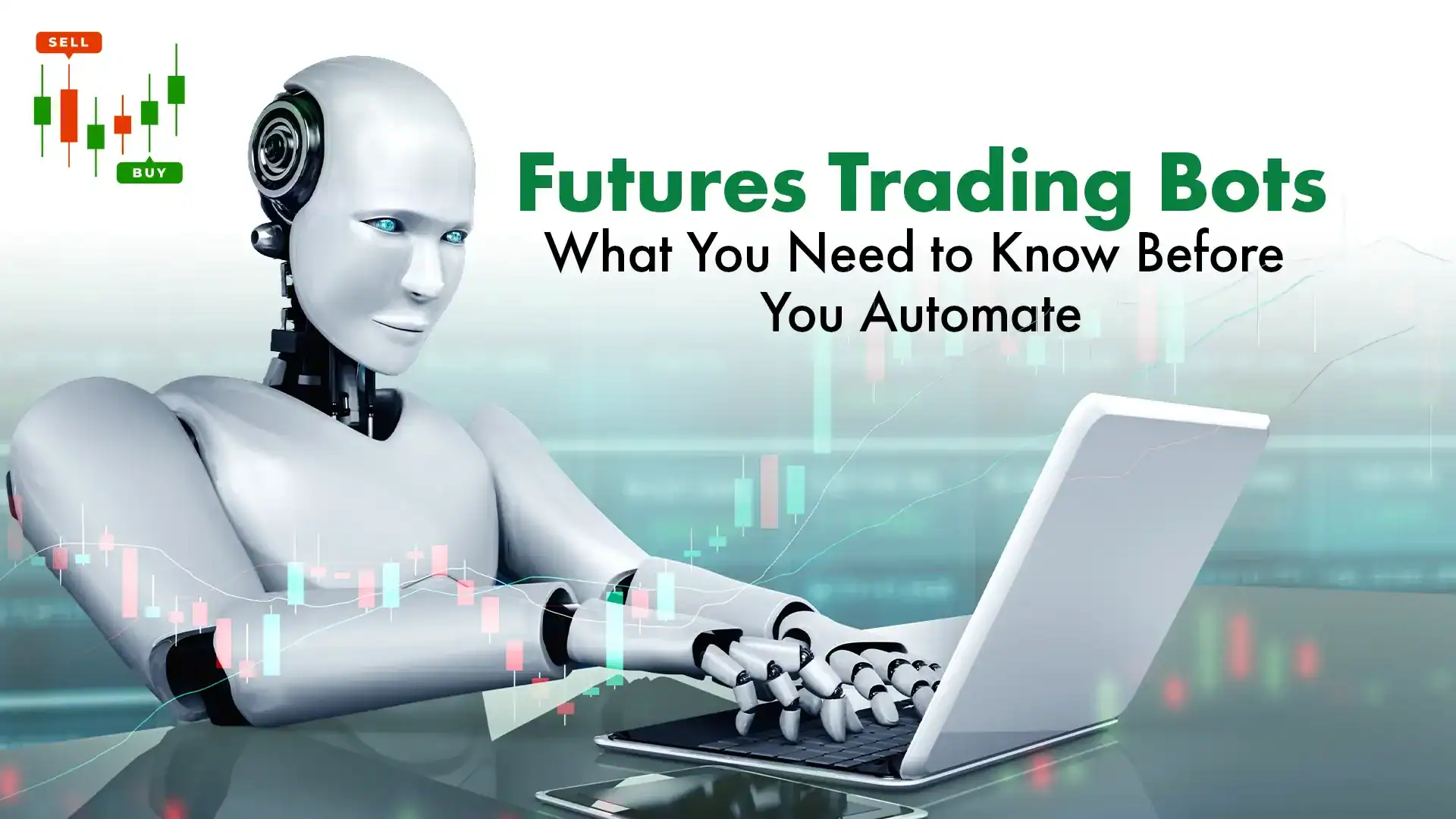
Automating futures trades with a bot can save time, remove emotion, and execute split-second strategies that humans can’t. But automation also brings unique technical, financial, and regulatory risks. This guide breaks down what futures trading bots do, why traders use them, the real risks (and regulatory guidance in the U.S.), and a clear checklist to evaluate or build a bot you can trust.
What is a Futures Trading Bot?
A futures trading bot is software that monitors market data and places buy/sell orders on futures contracts automatically, according to pre-set rules or machine learning models. Bots range from simple rule-based scripts (e.g., moving-average crossovers) to complex models that use AI, market microstructure signals, or high-frequency tactics.
How these Bots Work (simple view)
- Data intake: real-time price feeds, order book, and indicators.
- Signal generation: rules or models decide when to enter/exit.
- Execution: the bot sends orders to an exchange or broker for API.
- Risk controls: position sizing, stop losses, and kill switches to limit losses.
This loop runs continuously and can operate 24/7, which is why bots are attractive for futures, where speed and timing matter.
Why Traders use Futures Bots (Benefits)
- Speed and consistency: Bots act instantly on signals and follow rules without emotion.
- Backtesting: strategies can be tested over historical futures data to estimate performance (with the usual caveats).
- Execution advantages: some strategies require sub-second timing or complex order types that bots handle well.
These benefits can improve efficiency, but they do not guarantee profits.
Real Risks You Must Understand
- Market risk and leverage: Futures are often highly leveraged; small moves can produce big gains or large losses. A faulty bot can magnify losses quickly.
- Technical failures: bugs, bad data feeds, or connectivity issues can make a bot place erroneous trade or fail to exit positions.
- Market events & flash crashes: automated and high-frequency systems have contributed to extreme price events in the past; algorithms interacting at scale can create rapid instability
- Scams & overhyped promises: watchdogs warn that AI hype has been used by fraudsters to promise guaranteed returns—no bot can reliably predict markets.
- Regulatory exposure: U.S. regulators expect firms and market participants to manage AI/automation risks and comply with Commodity Exchange Act obligations; guidance and advisories stress governance and controls around automated systems
Regulation and Compliance
If you run bots for others, or you’re a firm, U.S. regulators (including the CFTC) have issued advisories warning about automation and AI risks and expect firms to maintain controls, testing, and oversight. Even retail traders should understand exchange rules, margin requirements, and whether their broker allows algo trading. Treat regulatory guidance as a compliance checklist, not optional reading.
Build vs Buy: a Practical Path
If you plan to build a bot, follow a careful, documented process: define strategy, backtest on clean historical futures data, forward-test in a paper account, implement strict risk controls (per-trade limits, daily loss caps), and run real-time monitoring and alerts. If you buy a commercial bot, vet vendor track records, auditability of strategies, safety features, and withdrawal/stop mechanisms. A clear step-by-step how-to guide can speed up that process but won’t remove risk—treat it as engineering plus trading discipline.
Practical Checklist Before You Automate (must-do items)
- Backtest thoroughly on multiple market regimes and include transaction costs.
- Paper-trade for weeks/months before leaving money.
- Set hard risk limits: max drawdown, max daily loss, position limits.
- Implement kill switches & monitoring: automated shutdowns and human alerts.
- Use reliable data feeds & error handling: validate incoming prices and handle gaps.
- Understand regulatory and broker rules for futures and automated orders.
- Start small: low-sized positions until you validate real-world behavior.
Bots are powerful tools like any power tool; they help when used carefully and can-do real harm when mishandled. Treat automation as engineering + trading psychology: build defensively, test exhaustively, and keep human oversight. If you’re starting, focus first on risk controls and simplicity; complex AI strategies are tempting, but they’re not magical. Use automation to enforce good trading habits, not to bypass them.